Viktor Madič in a black T-shirt against a black studio background

Viktor Madič

BD Lead & GTM SystemsBrno, CZ · hybrid or EU remote

I build AI systems that find the right buyers, and I’m the one who calls them.

A seller first: 120+ B2B accounts signed in logistics, now new business for a software studio. I build the tools behind it with Claude Code.

Email meThe systems I built ↓

Where I come from

I learned to sell on the phone and in person. Software and AI came later.

Wereldo 2022–2024

120+
B2B accounts I signed myself
2 M CZK
shipped a month by my accounts in 2024, up from 0.1 M in 2022
81 M CZK
revenue from my accounts so far, about €3.2M

Wereldo started as route-optimisation software for first- and last-mile delivery and became a carrier with its own dispatch and contracted vans. I joined a few years in, and revenue grew from 10 to 100 M CZK while I was in its sales team of 2–4. I called every day, and some accounts took a year of visits to close. They kept shipping after I left.

Futured 2024–now

15
qualified deals I brought in 22 months, 3 won
32 M CZK
in estimated project value, about €1.3M
Half
of them came through the systems on this page

Then software. At Futured I’m the only salesperson next to the CEO and plan every channel myself: a year of LinkedIn by hand (1,800+ messages logged), calls, events, then the systems further down this page. The other deals came from referrals and outreach by hand. Qualified means a confirmed budget, a meeting with leadership and a formal proposal.

Custom app work is moving in-house: “we’ll build it ourselves” is the most common no, and its share grew from 14% to 34% in eighteen months. I can show you the data.

mDevCamp 2026

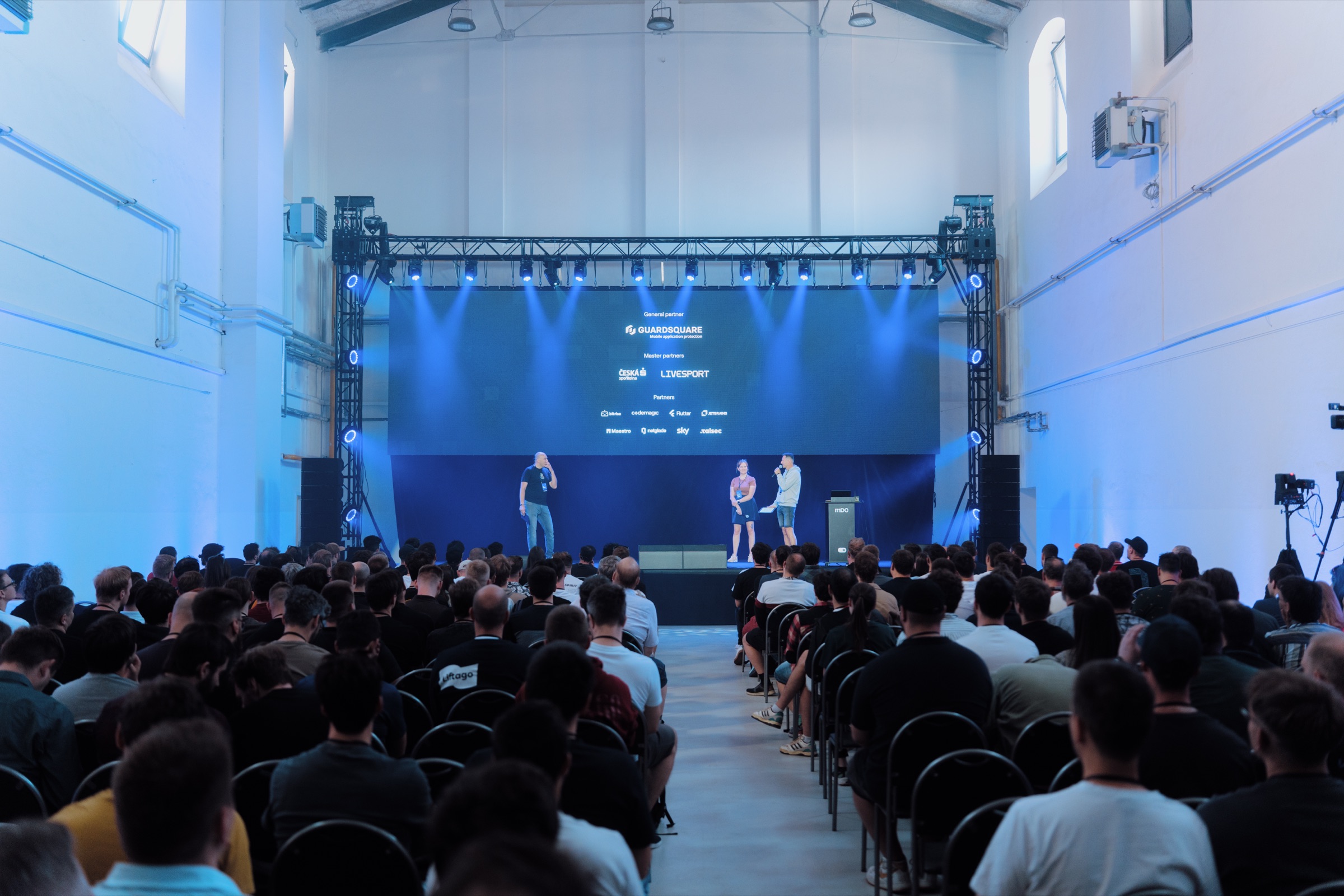
Alongside it, partnerships for a developer conference in Prague with 606 attendees, from target list to the booth: about 460 companies approached, 8 → 11 paying partners, +33% partnership revenue, 6 of 8 renewed. New partners included Google/Flutter, JetBrains and Guardsquare.

Watch the 2026 aftermovie →
mDevCamp 2026: the full main hall seen from the back rows, the partner wall on the screen behind the stage
mDevCamp 2026, Prague: the main hall, with the partners on the screen. Photo: David Parik / mDevCamp 2026.

How I work

Today I do both: I sell, and I build the tools I sell with.

How I sell

Data, problem, fit. I find the data on any market, work out what those companies struggle with, and check whether what I sell solves it.

How I build

I’m not a software engineer. I build internal tools with Claude Code and run them like products: versioned, tested, monitored. When something breaks, I fix the cause and add a test for it.

I work best next to experienced engineers: I bring the sales side and the AI-built tools, they make them production-grade.

Skills and tools

Selling
Full-cycle B2B sales, cold calling, outbound, discovery and proposals, partnerships, events and networking
CRM and data
HubSpot (custom properties, pipelines, API), Pipedrive, Apollo, Hunter, Kaspr, Lusha, Leady
Outreach
Instantly, Sales Navigator, Calendly, Clutch
Building
Claude Code, MCP, Gmail and Sheets API, Docker, GitHub Actions
Working together
Slack, Notion, Miro, Loom

What I built

All of it alongside a full-time sales job, in about 10 hours a week with Claude Code.

1

Calls and direct dials

105 / 181

companies where I found a decision-maker’s direct mobile (58%).

I fill the pipeline with calls. Calls through company switchboards gave far fewer warm leads than direct numbers.

Built

Agents sort 3,014 app publishers by buying signals, then a waterfall across Apollo and Kaspr finds the decision-maker’s direct mobile.

Result

On a direct number, every second call reached the decision-maker. Through a switchboard it was far fewer. Direct mobiles came in from finance to travel to healthcare, so I can reach almost anyone, for example a bank’s board member, and get a meeting.

What broke

v1 found plenty of numbers, all switchboards. Later a data provider “matched” all 65 company directors I gave it. Only 12 had a LinkedIn profile, and a test with an invented name exposed the rest.

Read the case →

Guardrails

No landlines. In corporates I call the budget owner, not the CEO. Every call is mine.

2

Email engine

10%

reply rate in my best segment.

Futured had no outbound, and no one knew which channel brought deals.

Built

25 campaigns in 3 countries, a HubSpot schema I designed (4 custom properties, 11 outreach states, an 8-stage pipeline), a reply poller that files most replies into HubSpot without me, and a dashboard built straight from the CRM. Sending runs on two warmed-up mailboxes on two domains, each capped at 50–60 emails a day.

Result

  1. 496Czech companies
  2. 50human replies
  3. 26interested or asking
  4. 4meetings
  5. 1paid project

The first paid project from my email sequences. 5,200+ emails, deliverability checked several ways: about 98% SPF and DKIM pass across 348 DMARC reports, 1.5% bounced, no replies found in spam. Abroad, custom app development didn’t land: the numbers gave no reason to keep going, so I stopped both markets.

What broke

An empty variable went out in 510 emails. An autoresponder created a fake deal, so a deal now needs proof that a human wrote.

Guardrails

Every campaign starts as a draft and goes live only on my go, after a test send. Since the empty-variable bug, I check the first email that actually went out.

Read the case →

The numbers

Aggregates only, from HubSpot, Instantly and Gmail via read-only scripts. No names. Built Oct 12–13, 2026.

Why companies said no →
Outbound messages a month

By hand until Feb 2026, with my own engine from Mar 2026. October is month to date. Replies per message fell from ~11% (mostly one-to-one LinkedIn) to ~3.5% (mostly email sequences): most of the new volume went into market tests, and most of those tests didn’t work.

Reply rate by stream

Human replies per Czech company contacted.

Who I wrote to

4,587 people I wrote to by email or on LinkedIn, by job title (1,210 without a known title left out). Half were owners, tech or product leads.

3

Tender radar

~1 day

of my own time for the first version, over 9 calendar days.

Public tenders were never worked systematically: they sit on dozens of buyer profiles that can only be read by hand.

Built

A daily radar over the official Czech buyer feeds and the EU’s TED. Rules decide what shows up. Claude comments, gives a second opinion on dropped IT tenders and pulls the qualification requirements from the documents, each with a quote checked against the text.

Result

Live since Aug 26, 2026, on our office server, every working morning. It has already surfaced tenders we went on to prepare bids for. The decision to bid stays with management.

What broke

A 21 M CZK tender slipped through before the radar went live. Later the prompt passed a buyer’s past tenders off as our references. A probe on a copy of the database caught it, not the unit tests.

Read the case →

Guardrails

Rules decide what shows up. The AI can add a tender, never hide one.

Platform rules are enforced in code before any request, backed by 1,400+ automated checks.

4

118

companies vetted in 11 weekly waves.

Website-visitor outreach

The weekly report of companies visiting our website took me at least a day a week to analyse and act on.

Visitor report → collision check against the CRM → qualification (revenue, size, a dated signal) → two decision-makers → personal drafts → I approve → logged in HubSpot.

Each company gets one of three decisions: write now, wait for its next visit, or let it go.

ResultReady the morning the report arrives, instead of after a day of manual work. The check stops over a third of the companies before any email, clients among them.

What broke Twice the “visit” was an echo of our own email, and CRM roles were out of date.

Guardrails Drafts only. Nothing is logged unless it is in Sent.

Read the case →
6

27%

of checked companies stopped before outreach, 32 of them clients or former clients.

Collision gate

One of our clients got a full cold sequence.

A check across 9 sources before any outreach. When unsure, it blocks.

Read the case →
7

81

links verified in a 32-page client deck, built in 3 h 10 min.

Fact-checking

AI drafts sound right and can be wrong.

Every claim checked against its primary source before anything goes to a client.

Read the case →

Also built

  • Hiring radar. Pulls job posts from five Czech and Slovak sources, and Claude sorts the mobile and web roles and removes duplicates. On its own it didn’t convert, but as a signal in account research it stays.
  • Shopify market check. Tested a new offer on the whole market in about a week: 364k domains → 68 qualified stores, $0 spent on data. The answers were no, so I moved on.
  • Finance-sector pipeline. From the Czech and Slovak central-bank registers to 95 one-to-one emails to 79 institutions in 25 hours, all through the collision gate.
  • Where the demand is. A market analysis in four rounds, with a second agent trying to refute every claim. The refuted theses stay in the report.
  • Morning brief. HubSpot tasks land in a sheet every morning. I reply in plain language, see the planned changes, and only then are they written back.
  • My own MCP server and skills. An MCP server over public company registers (ARES, Hlídač státu, SEC) and 15 Claude Code skills that run the work above.

Selling, start to finish

The systems fill the pipeline. Closing is people work, and I do it end to end.

  1. Calls and emails

    I make the calls and write the messages. The systems prepare who to reach and why.

  2. Replies and first meetings

    I answer the replies and run the first meeting: the problem, the budget, who decides.

  3. Technical meetings

    For technical meetings I bring in the right people from our team.

  4. Proposal and presentation

    I run the proposal process and present it to the client. At Wereldo that was 20–40 proposals a week, to manufacturers all over Czechia.

  5. Handover

    Once it’s signed, I hand the client over to delivery with the context they need.

Networking

Events, conferences and introductions are a channel I plan like any other. For mDevCamp alone I approached about 460 companies.

Deep or wide

Some weeks I run five systems at once, other weeks it’s only focused calling. I pick the mode the pipeline needs.

Next

  • Built for myself so far. Next, for a team I lead. I’ve already documented the stack for our developers and set up Claude Code for a non-technical colleague.
  • The tender radar runs on our office server and deploys on every push. The outbound tools still run on my laptop. They move next.
  • English: fluent, and I’m polishing it for high-stakes negotiations.

References

Former and current managers, on request.